Category Archives: Uncategorized
FTC Says Privacy Certification Company Was Deceptive
by John M. Simpson, Consumer Watchdog
TRUSTe agreed to stop the deceptive practices and disgorge $200,000. “TRUSTe promised to hold companies accountable for protecting consumer privacy, but it fell short of that pledge,” said FTC Chairwoman Edith Ramirez. “Self-regulation plays an important role in helping to protect consumers. But when companies fail to live up to their promises to consumers, the FTC will not hesitate to take action.” I’ve got a little different takeaway: Self-regulation doesn’t work. Read More ›
Deadline Extended for G.M. Accident Claims
by Danielle Ivory and Rachel Abrams, The New York Times

Although G.M. has recalled about 16.5 million vehicles this year for ignition-related flaws, the compensation fund relates specifically to a pool of about 2.6 million cars that were recalled starting in February, including models of the Chevrolet Cobalt and Saturn Ion. Officials at the automaker knew about problems in the cars for more than a decade, but failed to alert regulators and the public until this year. The cars have a defective ignition switch that can suddenly cut off engine power and deactivate airbags. Read More ›
CFPB Stretches Bank Rules to Cover Prepaid Cards, Mobile Payments
by Sheryl Harris, The Plain Dealer (Cleveland, Ohio)

“Many of these prepaid consumers are living paycheck to paycheck, and are engaged in a constant battle to make ends meet,” said CFPB Director Richard Cordray in remarks prepared for a field hearing Thursday. “They are some of the most economically vulnerable among us, and most of them have no idea that the prepaid cards they choose to purchase are largely unregulated.” … Many prepaid card issuers broadened consumer protections and trimmed fees as they came under increased scrutiny from the bureau. Read More ›
More Cracks in Google’s ‘Don’t Be Evil’ Mantra as Data Collection, Political Power Soar
by Deirdre Fulton, Common Dreams

The combination of expanding technology and exploding political influence could be dangerous, Public Citizen warns. “Google has essentially responded to concerns about its practices by saying ‘just trust us’,” said Taylor Lincoln, research director of Public Citizen’s Congress Watch division and editor of the report. “But Google is gaining so much power that regulators may find it difficult to act if it turns out that the public’s trust has been misplaced.” Read More ›
Why You Shouldn’t Get a Reverse Mortgage Just Because Fred Thompson Tells You to
by Ashlee Kieler, Consumerist
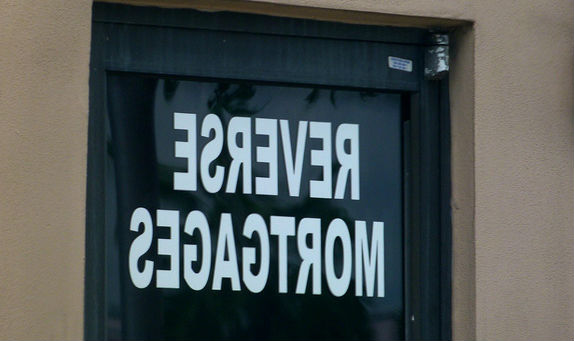
Reverse mortgages have been found to leave families with debts they can never repay, four-in-five payday loans are made to consumers already caught in the debt trap, and on average 54% of students who attend a for-profit college leave without a degree — with one-in-five of those students defaulting on their loans. … Consumers Union, along with California Advocates for Nursing Home Reform provided comments to the Consumer Financial Protection Bureau regarding consumers’ use of reverse mortgages. Read More ›
CFC Addresses Benefits and Risks of Driverless Cars
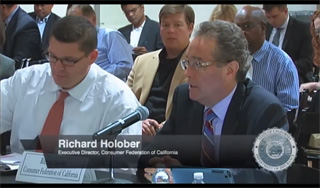
Noting that the technology could reduce accidents if it’s widely adopted, CFC Executive Director Richard Holober stressed the need to ensure that any savings get passed along to consumers under Proposition 103. He also cited concerns about who would have access to data from the vehicles, and of possible meddling by hackers. Read More ›
Americans Say They Want Privacy, but Act as if They Don’t
by Claire Cain Miller, The New York Times
Pew offered some evidence that people are inured to the trade-offs of using digital services: Ninety-one percent agree or strongly agree that consumers have lost control over how their personal information is collected or used by companies. They are unsure what to do about it, though. Nearly two-thirds say they would like to do more to protect the privacy of their personal information online. About the same number think the government should do more to protect them. Read More ›
California’s Strawberry Industry Is Hooked on Dangerous Pesticides
by Bernice Yeung, Kendall Taggart and Andrew Donohue, Center for Investigative Reporting

Growers rely on heavy amounts of some of the most dangerous pesticides – a class called fumigants – to deliver the fruit year-round at an affordable price for consumers. Because strawberries like to grow where people like to live, in the perpetual spring of coastal California, growers often use the pesticides near schools, homes and businesses. … Nearly a decade after the pesticide was supposed to be banned, the state’s strawberry growers have staved off the deadline by warning of financial ruin. Today, they use about 90 percent of all the methyl bromide in the developed world. Read More ›
GM Ordered Switches Nearly 2 Months Before Recall
by Tom Krisher, The Associated Press
The switches can slip out of the run position, causing engines in cars such as the Chevrolet Cobalt to stall. If that happens, the power steering, brakes and air bags are disabled, and people can lose control of their cars. GM eventually recalled 2.6 million small cars for the problem, which has caused at least 32 deaths. The emails in the chain, which run from December into February, call the matter “urgent” and eventually use the words “safety issue.” Read More ›
Apple Mobile Devices Vulnerable To App Attack, FireEye Says
by Jeremy C. Owens, San Jose Mercury News

Apple mobile devices can leak users’ information through an attack using apps distributed outside the company’s App Store, a prominent Silicon Valley security company disclosed Tuesday. … Hackers could offer a mobile app through the Web that would mimic a legitimately downloaded application on a user’s device, siphoning important information such as login info or emails. An example provided showed that a third-party app called “New Flappy Bird” could replace the Gmail app and access cached emails, using the same “bundle identifier” that Apple uses for the Gmail app. Read More ›
Lured by Verizon into Giving up Cellphone Privacy
by David Lazarus, Los Angeles Times

Similar tactics are employed by practically all other telecom, financial and Internet companies. But Verizon Wireless has been unusually clumsy in its efforts to coax customers into abandoning their privacy. … It’s using the prospect of money-saving deals as an enticement for people agreeing to let the company peer over their shoulder. [One analyst] said programs such as Verizon Smart Rewards represent “a location gold mine” that can be used by wireless carriers for “big data analytics and advertising.” The wireless industry could be looking at nearly $2 billion in extra revenue by 2019. Read More ›
It’s the Worst Year Ever for Auto Recalls. Why Are So Many Dangerous Cars Still on the Road?
by Drew Harwell, The Washington Post
Those defective cars can then spread widely to used car lots and the driveways of unsuspecting buyers. About 3.5 million recalled cars and trucks were listed for sale last year, according to Carfax. Keeping track of what cars are problematic can also prove a hassle: Stericycle, a recall consultant and service firm for automakers, said there have been 544 separate recalls announced this year, or nearly two recalls a day. Read More ›
CPUC Lawyers Say Bosses Kept Quiet on Judge-shopping Order
by Jaxon Van Derbeken, San Francisco Chronicle
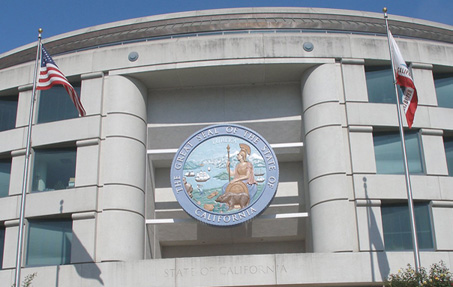
“To our knowledge, the commission has not taken appropriate steps in the past months to preserve evidence, such as notifying all relevant commission officers and staff of their obligations,” the lawyers wrote to the five commissioners. They said some agency offices were planning “clean-out days” in preparation for a return to the commission’s renovated headquarters on Van Ness Avenue, “and that records may be destroyed in the process.” Read More ›